
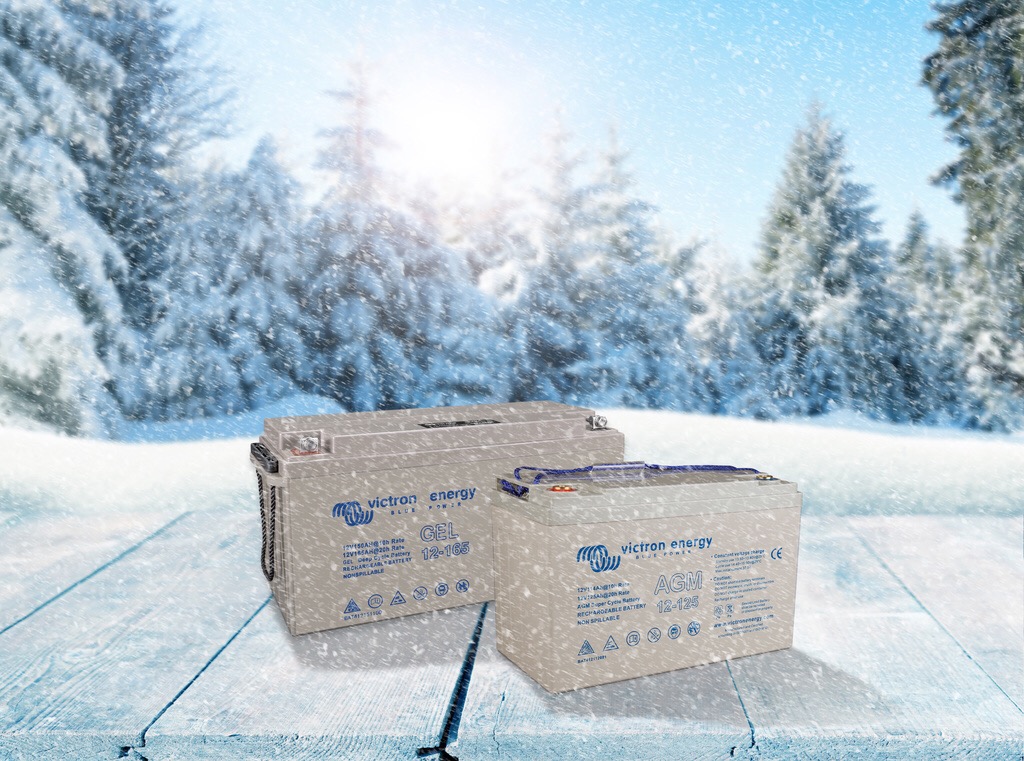
Battery Care: Lead-acid battery charging in cold weather
 •January 16, 2019•8 Minutes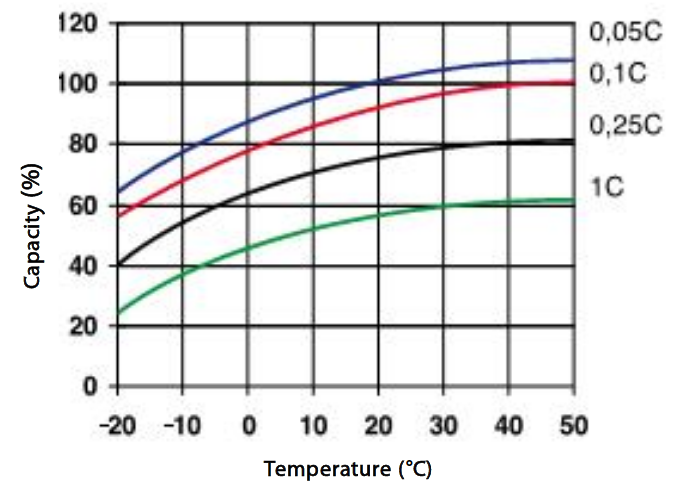
Lead acid battery differences
Lead acid batteries come in a variety of types:
- Wet lead with the ability to top up each of the six cells with de-mineralised water.
- The so called ‘sealed’ wet lead leisure or rather maintenance free battery. These cannot be topped up and often have a green go or red no go cell inspection indicator.
- AGM (Absorbent Glass Mat) valve-regulated lead-acid (VRLA), where the electrolyte is absorbed in a glass mat.
- Similar to the AGM, but the electrolyte is held in a Gel.
- Gel (Better cycle life than AGM).
- AGM (Better than Gel for higher loads and well suited for use with inverters).
- AGM Telecom. Designed primarily for Telecom applications, but also excellent ‘footprint space savers’ for marine and vehicle applications.
- AGM Super Cycle (Best if frequent discharge to 60-80% DOD is expected).
- Lead Carbon Battery (Improved partial state-of-charge performance, more cycles, and higher efficiency).
- OPzV 2V individual battery cells. Long life, high capacity gel.
- OPzS 2V individual battery cells. Long life high capacity flooded tubular plate batteries for specialist solar applications.
Temperature compensation and charging
Now we know about the kind of batteries, capacities and loads we are dealing with, we need to put some numbers together for temperature compensation and charging.The recommended temperature compensation for Victron VRLA batteries is – 4 mV / Cell (-24 mV /°C for a 12V battery).Besides accounting for cold weather charging the charge current should preferably not exceed 0.2C (20A for a 100Ah battery) as the temperature of the battery would tend to increase by more than 10°C if the charge current exceeded 0.2C. Therefore temperature compensation is also required if the charge current exceeds 0.2C.How to achieve temperature and voltage compensated charging
There are a range of Victron products to achieve this.With our range of inverter/chargers and since VE.Bus firmware version 415 was released some time back this has ensured that:– Temp compensation continues down to -20C– This is for all voltage set-points, except for float, storage and the start of bulk charging– As soon as the temperature goes below -30C, the compensation mechanism is disabled (normal charge voltages are applied) and a warning is shown.For systems that don’t use an inverter/charger – we can use Smart Battery Sense to ensure that charging sources provide optimal voltage and temperature compensated charging to your batteries, by wirelessly transmitting accurate battery voltage and temperature values to your Solar Charge Controller or Smart battery charger.This information is then used to set the ideal charging parameters, resulting in more complete, faster charging – improving battery health and therefore extending battery life.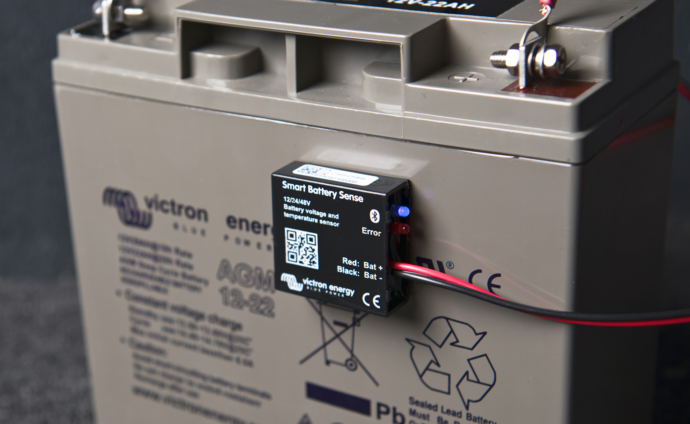
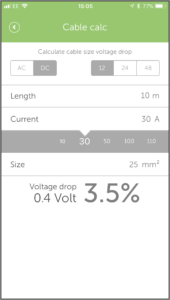
The Victron Toolkit app allows you to calculate cable sizes and voltage drop. Here’s an example where cable length is the round trip of the positive and negative battery charging cables. This is so you get an idea of what Smart Battery Sense automatically takes into account to ensure the correct charge voltage goes into the battery, by ensuring the charge voltage is compensated for and corrected due to any cable losses.
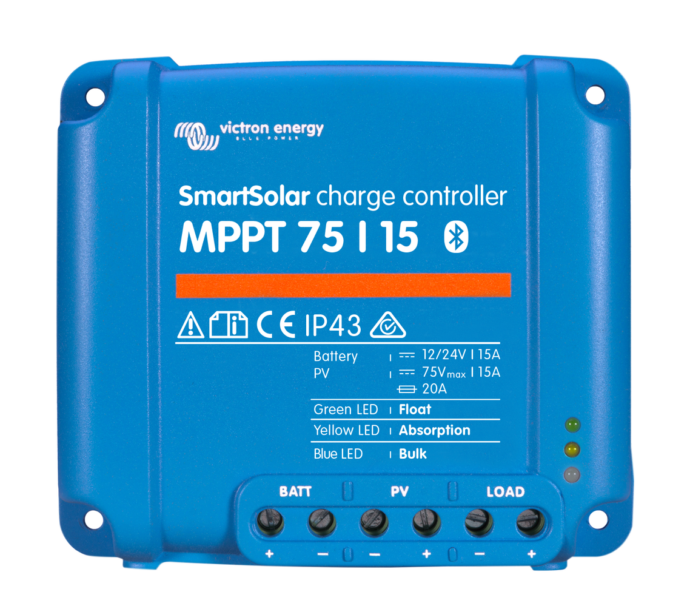
 Victron’s range of SmartSolar MPPT Charge Controllers all work with the Smart Battery Sense. In fact I’ve just fitted one to my motorhome, along with the required Smart Battery Sense, due to the fact the leisure battery temperature location when compared to the location of the controller can have a difference of up to ten degrees. Definitely a case for ensuring accurate temperature compensation.
 Other products can be connected too by using what we call ‘VE.Smart Networking support’. See the VE.Smart Networking page.
Conclusion
With the above solutions I know I’ll be happier now that my batteries are getting exactly the right charge due to optimal temperature and voltage compensation.